

Session 171: RBMO Live 16: Awards 2025

Donate
At the International IVF Initiative, we are committed to providing free access to our educational sessions, webinars, and resources for professionals and individuals passionate about advancing reproductive medicine. We believe that cost should never be a barrier to knowledge and collaboration. By contributing, you’re ensuring that valuable educational resources, expert insights, and collaborative opportunities remain open to all without financial barriers. Together, we can continue to foster a global community dedicated to innovation and excellence in the field of IVF.
Your Donation
Thank you!
Session 171: RBMO Live 16: Awards 2025
Tuesday, 9th June 2026, at 3pm EST/ 8pm UK/9pm CET.
Hosts:
Prof. Juan Garcia-Velsaco & Dr. Mina Alikani
Speakers:
Dr. Gerardo Mendizabal-Ruiz: A digitally controlled,
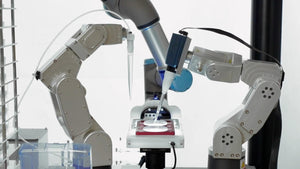
remotely operated ICSI system: case report of the first live birth
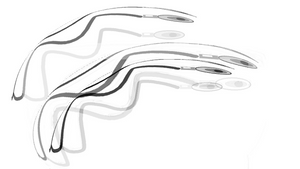
Dr. Steven Vasilescu: A biomimetic sperm selection device
for routine sperm selection
Q and A
Synopsis:
Hosted by Prof. Juan Garcia-Velasco and Dr. Mina Alikani, this special RBMO Live session celebrated the winner and runner-up of the 2025 Robert G. Edwards Prize Paper Award, recognising two outstanding contributions to innovation in reproductive medicine. The webinar highlighted how engineering, automation and biomimetic design are beginning to transform everyday practice in the IVF laboratory.
Dr. Gerardo Mendizabal-Ruiz presented the prize-winning paper describing the first successful live birth following the use of a digitally controlled, remotely operated ICSI system. He outlined the development of the platform and discussed how the integration of robotics, digital control and remote operation could extend specialist expertise beyond geographical boundaries. The subsequent discussion explored the future role of human-in-the-loop systems, trust in automated technologies, operator training and the regulatory and ethical challenges that accompany increasing laboratory automation.
Dr. Steven Vasilescu then presented the runner-up paper on a biomimetic sperm selection device designed for routine laboratory use. Drawing inspiration from the natural selection processes of the female reproductive tract, the technology offered a non-invasive alternative to conventional sperm preparation methods. The presentation reviewed the scientific rationale behind the device, the published evidence supporting its use and its potential to improve sperm quality, laboratory workflow and downstream embryological outcomes.
The session concluded with an interactive question-and-answer discussion, where participants considered the evidence required for the clinical adoption of new technologies, the balance between automation and embryologist expertise, and how innovations such as remote ICSI and biomimetic sperm selection may shape the future IVF laboratory.
Prof. Juan Garcia-Velsaco
Chief Scientific Officer or IVI RMA Global and Director of IVI RMA Madrid, where he attends his patients. He is also Professor of Obstetrics and Gynaecology at Rey Juan Carlos University, Madrid, Spain
Professor García-Velasco graduated from University Medical School, Madrid, in 1990 and received his obstetrics and gynaecology certification from La Paz Hospital, Madrid, in 1995. He completed his PhD in Medicine at Autonoma University, Madrid, in 1995, and from 1997 to 1998 studied at Yale University, New Haven, CT, under a Reproductive Endocrinology and Infertility Fellowship.
Professor García-Velasco’s main research interests have been in IVF and endometriosis. He is the Principal Investigator of projects funded by the Ministry of Education and Ministry of Health in Spain, and has received awards from the Spanish Fertility Society, Spanish Society of Obstetrics and Gynaecology, and the European Society of Human Reproduction and Embryology. He has published over 200 peer-reviewed articles and 30 book chapters and 6 books on human reproduction, endometriosis and hypo- and hyper-ovarian stimulation response. He is the Co-Editor in Chief of Reproductive Biomedicine Online.
Dr. Mina Alikani
Mina obtained her PhD in 2006 from Monash University under the mentorship of Professor Alan Trounson. Mina is a Clinical Consultant and a Board-Certified High Complexity Laboratory Director in assisted human reproduction, she provides expert guidance and support to embryology and andrology laboratories. Mina has extensive experience in setting up and directing successful laboratories, ensuring effective quality management, compliance, and best practices in all aspects of laboratory operations and patient care.
She is Science Editor with more than a decade of experience at Reproductive Biomedicine Online and has authored and co-authored more than 80 peer-reviewed articles and book chapters, and lectured around the world on various topics related to assisted reproduction.
Dr Alikani is the president of Alpha Scientists in Reproductive Medicine, and on the Scientific Advisory Boards of TMRW and Conceivable Life Sciences
Dr. Gerardo Mendizabal-Ruiz
Dr. Mendizabal is a researcher and inventor focused on automation and
IVF, working on advanced systems that blend engineering, AI, and
reproductive medicine. He takes a forward-looking, practical approach to
problem-solving.
Gerardo is a researcher and inventor specializing in automation and in vitro fertilization (IVF), with a strong focus on developing advanced technological systems for reproductive medicine. His work integrates engineering, computer vision, robotics, and AI to design precise, scalable, and reliable solutions. He has experience in applied research, prototyping, and patent development, bridging the gap between scientific theory and real-world implementation. Gerardo is driven by innovation, efficiency, and measurable impact, aiming to create technologies that improve clinical outcomes and expand the possibilities of assisted reproduction
Dr. Steven Vasilescu
Steven is the inventor of the SpermGuide biomimetic microfluidic device and a co-inventor of SpermSearch.AI, both developed to translate laboratory research into clinically deployable tools for IVF. He lectures in Engineering Design and Microfluidics at UTS and maintains active collaborations with reproductive medicine research groups in Australia and internationally. As Founder and CEO of NeoGenix Biosciences, he leads the company's research direction and the translation of its technologies toward clinical and regulatory adoption.
Dale Goss
company developing technologies to improve sperm identification and selection in assisted reproduction. He holds a background in reproductive physiology and clinical embryology and is completing a PhD in Biomedical Engineering at the University of Technology Sydney, investigating how small extracellular vesicles from the female reproductive tract influence sperm function and fertilisation outcomes. His broader work spans reproductive cell biology, proteomics, and translational technology development, with a focus on bridging laboratory research and clinical practice in IVF.